

How to Win at Perplexity SEO: Freshness Beats Backlinks
Quick answer
Perplexity SEO is not Google SEO with a new logo, because Perplexity reads the live web on every query and barely weighs backlinks.
- It favours fresh pages, structured sources and tight summaries
- Publish often and cite real data
- Format answers an engine can lift in one block
- Cadence beats authority here

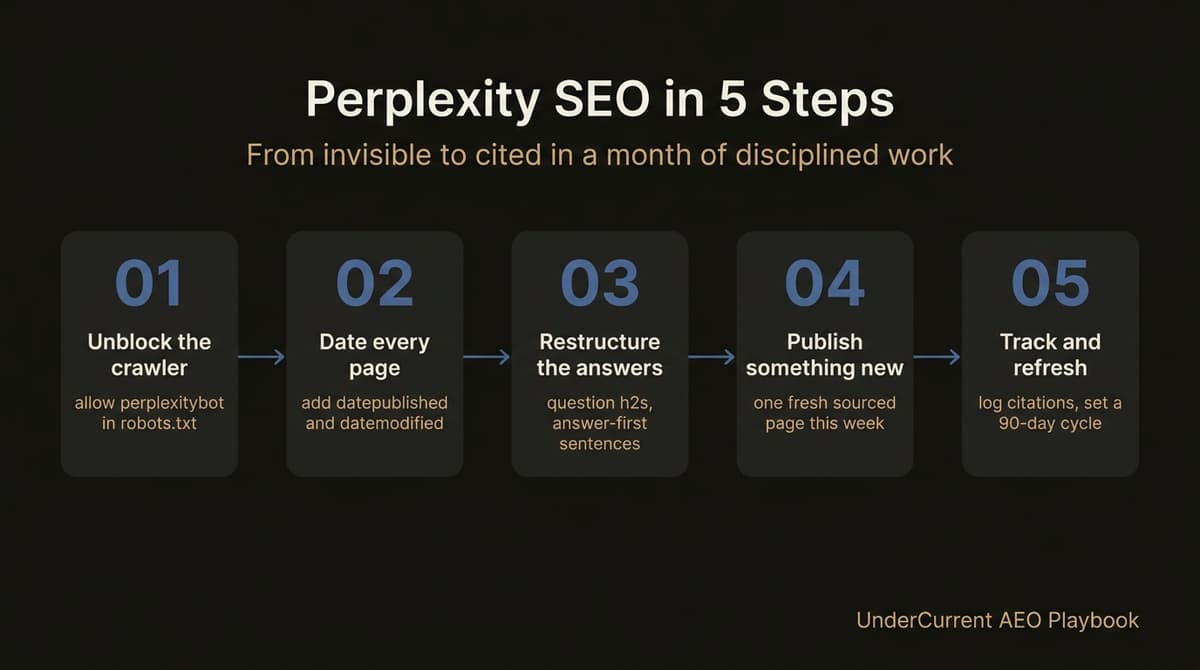
Most Australian businesses still treat AI search as one thing. It isn't. ChatGPT, Google AI Overviews and Perplexity pull from largely different pools of content, and the page that earns you a citation in one can be invisible in the next. Perplexity SEO is the practice of structuring content so Perplexity's answer engine cites it as a source. This guide covers what Perplexity actually rewards, what we found scoring 69 Australian AI-search pages, and a 30-day plan you can run yourself. For the bigger picture, start with our take on AI search versus traditional SEO in Australia.
What Is Perplexity SEO?
Perplexity SEO is the practice of structuring content so Perplexity's answer engine cites it as a source in its written answers. An answer engine is a search tool that returns a short, sourced response with numbered citations instead of ten blue links. Perplexity ran roughly 780 million queries in May 2025, up from about 230 million the previous August, going by Perplexity usage data for 2025. The work splits three ways. Freshness is how recently a page was published or substantively updated, and Perplexity weights recent content heavily. Source structure means tight, scannable passages with claims an engine can lift word for word. Entity clarity means the page makes obvious who you are, backed by consistent details across the web. None of that is link-building. There are 2,729,648 actively trading businesses in Australia (ABS Counts of Australian Businesses) chasing a handful of citation slots, so the gap between ranking on Google and getting cited on Perplexity is real money.
| Perplexity, by the numbers | Figure |
|---|---|
| Monthly search queries (May 2025) | About 780 million |
| Monthly active users | Around 22 million |
| Users in the 18-34 bracket | More than 53% |
| Visits arriving as direct traffic | About 82% |
| Month-on-month query growth (mid-2025) | Around 20% |
Why Doesn't Ranking on Google Get You Cited on Perplexity?
Because Perplexity isn't reading Google's index, it reads the live web on the query and picks the few pages that answer cleanly with sources. Different engines, different shortlists. When researchers compared the pages cited by ChatGPT, Google AI Overviews and Perplexity for the same prompts, the overlap was small. By some counts only around 14% of cited content shows up across all three, so a win on one doesn't carry to the others (analysis of ChatGPT, Gemini and Perplexity for SEO). Google leans on backlinks and domain authority. Perplexity leans on whether a page states a verifiable claim it can lift in a sentence. A page ranking page one on Google for "buyers agency Melbourne" can be absent when someone asks Perplexity the same thing. Small business carries a big share of Australia's private-sector jobs (ASBFEO employment data), so the firms that adapt to answer-engine search first pick up enquiries the rest miss. Our ChatGPT search ranking guide covers the other side of this split, and the AI-search visibility pillar maps the whole picture.
What Does Perplexity Actually Reward?
Four signals do most of the work, and not one of them is a backlink.
The four signals, in order
- Freshness comes first: Perplexity skews hard toward content published or updated recently, so a page untouched for 6 months is already behind.
- Source density: pages packed with concrete, checkable claims (numbers, dates, named methods) get pulled into answers more often than pages that hand-wave.
- Structure: short, self-contained passages and clean FAQ blocks are easy for the engine to lift in one piece; walls of text aren't.
- Entity clarity: the page, plus your wider footprint (LinkedIn, Wikidata, consistent business details), should make obvious who you are.
We see the same split in our own corpus: the pages that do three of those four well sit in the top bands, and the rest are usually long, undated and short on data. Practitioner reverse-engineering of Perplexity citations found format beat brand size, with a small site outranking a big one. Run your top page through our self-check SEO audit, and our how to rank on Google in Australia guide for the search side.
How Does Perplexity Pick Which Sources to Cite?
It runs your query, fetches pages from the live web, and shortlists the ones that answer the exact question with claims it can attribute. Three things tilt the shortlist your way. First, the page has to actually answer the prompt. A service page that talks about itself loses to one that explains the thing the searcher asked about. Second, it needs lift-ready passages: a sentence or short block that states a fact with enough context to stand on its own. Third, the engine cross-checks who you are, so a consistent business name, address and profile across the web help your page get trusted over an anonymous one. Australians are using Perplexity for real research now, not just to kick the tyres, and practitioner walk-throughs describe the same pattern: clean answers, real sources, recent dates. For a deeper map of how visibility works across answer engines, the AI search visibility hub for Australia lays it out.
What We Found Scoring 69 Australian AI-Search Pages
We reviewed 69 Australian AI-search pages in our own audit corpus. The spread was lopsided.
| Where 69 Australian AI-search pages landed | Pages | Share |
|---|---|---|
| Strong (80+ on a 100-point rubric) | 9 | 13% |
| Competent (60–79) | 22 | 32% |
| Weak (30–59) | 38 | 55% |
Three things stood out
- Freshness, not length, split the bands. Pages below 60% were mostly long, undated and over a year old.
- Fewer than 1 in 7 cleared the strong band, more than 1 in 2 sat in the weak one, and the strong few weren't all agencies. Several were one-person shops with a dated FAQ block kept current.
- Almost none of the weak pages cited source-grade data.
Our own pages average 81% on the same rubric, and the gap is structure and cadence rather than budget. The sector runs near 2.5 million firms (ASBFEO data), and most of those sites are invisible to answer engines (ABS counts). See our plumbers' SEO case study and the Melbourne buyers-agency AI-search write-up.
How Often Should You Publish to Stay Cited on Perplexity?
Often enough that something on your site is always recent. For most service businesses that means one new or refreshed page a fortnight plus a quarterly pass over your core pages. Citation cadence is the rhythm at which a site ships new, source-worthy content, and on Perplexity it matters more than on Google. A page that was excellent 12 months ago and hasn't moved is competing against ones published in the last 30 days. So date your pages, set a 90-day review cycle for your money pages, and add a fresh dated FAQ or data point each time you revisit one. Small business is central to the Australian economy: a large share of national output (ABS Australian Industry), with its own watchdog and standing review (Treasury review of the ASBFEO) and a regularly-updated ASBFEO data portal. Your money pages should too. If you don't have the team to keep it up, that's what a content cadence and AEO retainer is for. For a worked example, see our GEO playbook for buyers agents and the AI content automation case study.
What Schema and Structure Does Perplexity Prefer?
Structured, dated, machine-readable content, plus a crawler door left open. PerplexityBot is the crawler Perplexity uses to fetch and index pages, so the first move is making sure your robots.txt isn't blocking it. The second is putting datePublished and dateModified on your articles, and FAQ schema on your question-and-answer blocks, so the engine can read the answer cleanly. Article schema with an author and an organization block helps the entity-clarity side; it tells the crawler who published this. Here's the FAQ schema shape:
{
  "@context": "https://schema.org",
  "@type": "FAQPage",
  "datePublished": "2026-05-12",
  "dateModified": "2026-05-12",
  "mainEntity": [{
    "@type": "Question",
    "name": "What is Perplexity SEO?",
    "acceptedAnswer": {
      "@type": "Answer",
      "text": "Perplexity SEO is structuring content so Perplexity's answer engine cites it as a source."
    }
  }]
}
And the robots.txt entries that keep the door open:
User-agent: PerplexityBot
Allow: /

User-agent: PerplexityBot-User
Allow: /
Beyond schema, the structure that wins on Perplexity is plain: H2 headings phrased as the questions people actually type, the answer in the first sentence of each section, and short self-contained passages instead of walls of text. Our guide on comparing AI search agencies in Australia covers what to look for if you hand this to an outside team.
Can You Track Your Perplexity Citations?
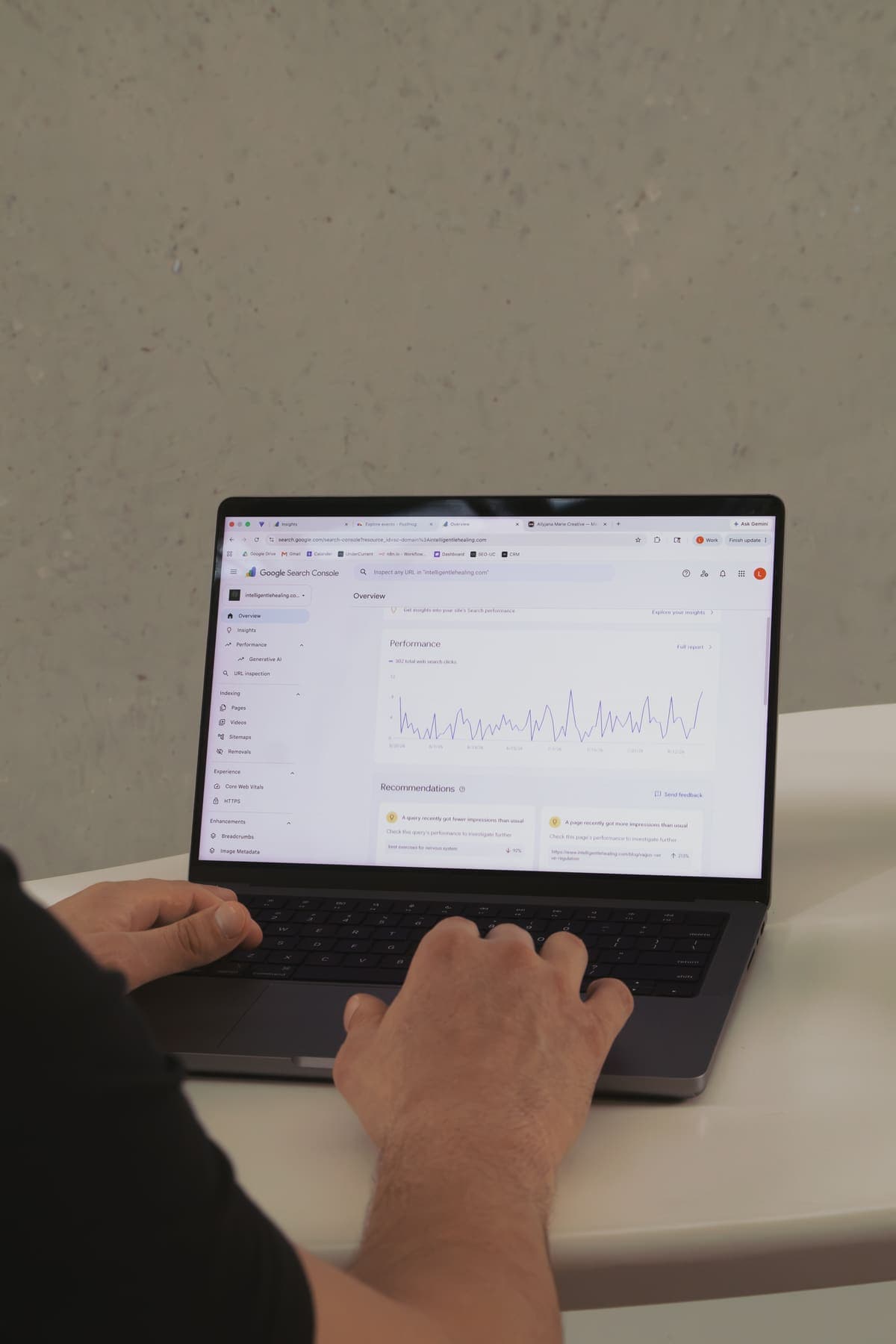
You can, not perfectly, but well enough to steer. There's no Search Console for Perplexity, so the practical method is a recurring check: run your priority questions in Perplexity yourself, note which pages it cites and whether yours appears, and log it monthly. It takes about 20 minutes a month. Add a referral-traffic filter for perplexity.ai in your analytics, since a share of cited pages do pull direct visits. Tools that monitor brand mentions across answer engines are starting to land, but a disciplined manual pass (same questions, same day each month) catches most of what you need. If a citation disappears, the usual cause is a competitor publishing something fresher, so the fix is republishing with a newer date and a sharper answer. In our experience the swap-back often lands inside 14 days. For a second opinion on whether your site is built for any of this, our roundup of the best AI search agencies in Australia sets the bar, or book a 30-minute call and we'll go through it with you.
Perplexity SEO vs ChatGPT SEO: Where the Lists Diverge
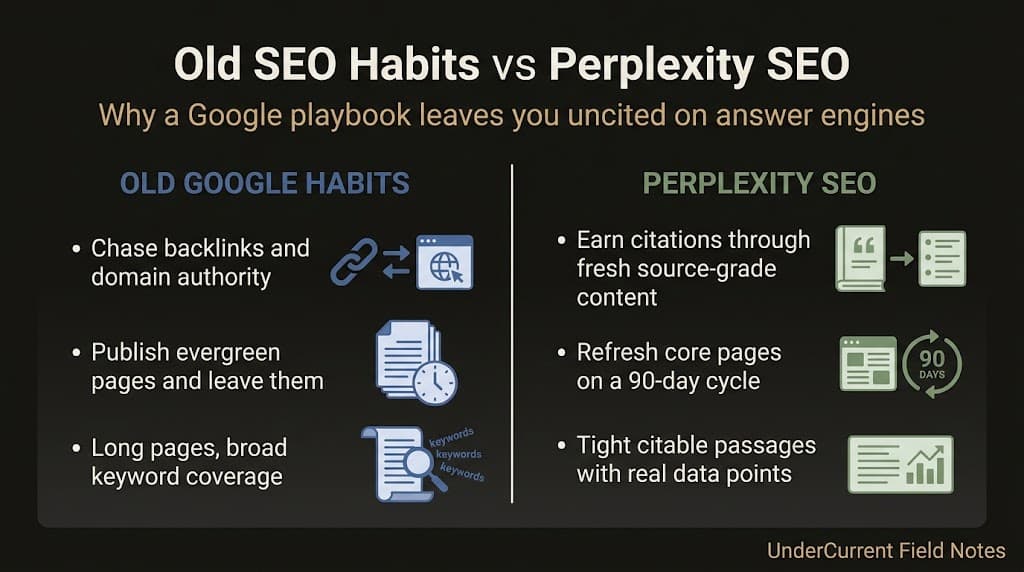
Same goal, different shortlists, which is why you work both, not just one. ChatGPT (search mode) and Perplexity both read the live web but weight pages differently, so they cite largely separate content. Here's how Perplexity compares to the Google SEO you already know:
| Signal | Traditional Google SEO | Perplexity SEO |
|---|---|---|
| What it reads | An index snapshot | The live web, on most queries |
| Top ranking factor | Backlinks and domain authority | Freshness, source structure, citation worthiness |
| Content age | Evergreen pages rank for years | Skews to the last 30–90 days |
| Winning format | Long pages, broad keyword coverage | Tight, citable passages and clear data points |
| How you measure it | Rankings and organic clicks | Citations and brand mentions in answers |
Build the page once to answer the question properly, structure it so any engine can lift it, then keep it fresh. Our ChatGPT search ranking playbook handles that side. What AI automation looks like for Australian businesses covers running the cadence.
Your 30-Day Perplexity SEO Action Plan
Thirty days is enough to move from invisible to cited if you're disciplined about it.
The 30 days, week by week
- Unblock PerplexityBot in robots.txt, add
datePublishedanddateModifiedto your articles, and add FAQ schema to your top three money pages, Week 1 - Rewrite those three pages so every H2 is a real question and the first sentence answers it, and add at least one checkable data point per section, Week 2
- Publish one new page targeting a question you know your buyers ask Perplexity, dated today, with sources, Week 3
- Run your priority questions in Perplexity, log which pages it cites, and lock in a recurring fortnightly publish slot and a 90-day refresh cycle, Week 4
Then keep going, because Perplexity SEO is a cadence, not a project. Pressure-test your site with our self-check SEO audit, read the AI-search visibility pillar for the strategy layer, or hand the cadence to us with an AEO and content retainer.
Sources
- ABS: Counts of Australian Businesses
- ABS: Australian Industry
- ASBFEO: Contribution to Australian employment
- ASBFEO: Number of small businesses in Australia
- ASBFEO: Small Business Data Portal
- Treasury: Independent review of the ASBFEO
- Perplexity usage data for 2025
- Analysis of ChatGPT, Gemini and Perplexity for SEO
- Reverse-engineering of Perplexity citations
Frequently asked questions
Is Perplexity SEO different from regular SEO?
Yes. Regular SEO tunes pages for Google's index, which leans on backlinks, domain authority and evergreen relevance. Perplexity SEO tunes pages for an answer engine that reads the live web on each query and rewards freshness, structured source-grade passages and clear entity signals over links. The skills overlap, since clean content helps both, but the priorities differ enough that you should treat them as separate jobs rather than assuming one covers the other.
How long does it take to get cited on Perplexity?
Faster than ranking on Google, often weeks rather than months, because Perplexity re-fetches the live web on most queries instead of waiting for a crawl cycle. A well-structured, dated page that answers a real question can show up in answers within days of publishing. The harder part is staying cited: a page that isn't refreshed slips behind newer content, so the realistic timeframe is "cited quickly, then maintained" rather than "publish once and forget".
Can small Australian businesses get cited on Perplexity?
Yes, and structure beats size here. In the pages we've scored, several of the strongest were one-person consultancies that answered the question well, dated the page, and kept it current. They outranked larger competitors who hadn't. Perplexity cares whether your page answers the prompt with sources, not how big your brand is. For a small Australian business that's an edge: you can publish a tight, dated, well-sourced page faster than a large team can get one through approvals.
Should I block or allow PerplexityBot in robots.txt?
If you want Perplexity citations, allow it. PerplexityBot is the crawler that fetches your pages so they can appear as sources in answers, and blocking it makes you invisible there by choice. Check your robots.txt for a `Disallow: /` under `User-agent: PerplexityBot` or a blanket block and remove it. Some publishers block AI crawlers on principle, which is a fair call, but understand the trade: no crawler access, no citations, no referral traffic from that engine.
Does Perplexity index PDFs and case studies?
It can read and cite PDFs, case studies and other document-style pages, as long as they're crawlable and carry clear, attributable claims. A case study with named numbers, dates and a stated method is the kind of source an answer engine likes to quote. The catch: if it's behind a form, not linked from your site, or undated, it won't get picked up. Publish proof pages as crawlable HTML with the numbers in the text, not only in an image.
Why did my Perplexity citation disappear?
Almost always because someone published something fresher or better-structured on the same question and the engine swapped them in. Perplexity reshuffles its shortlist constantly, so a citation is a position you hold, not a trophy you keep. The fix is usually fast: republish with a current date, sharpen the first sentence of each section, add a fresh data point, and state the contested claim more clearly than the competitor. If it keeps happening, your cadence is too slow.