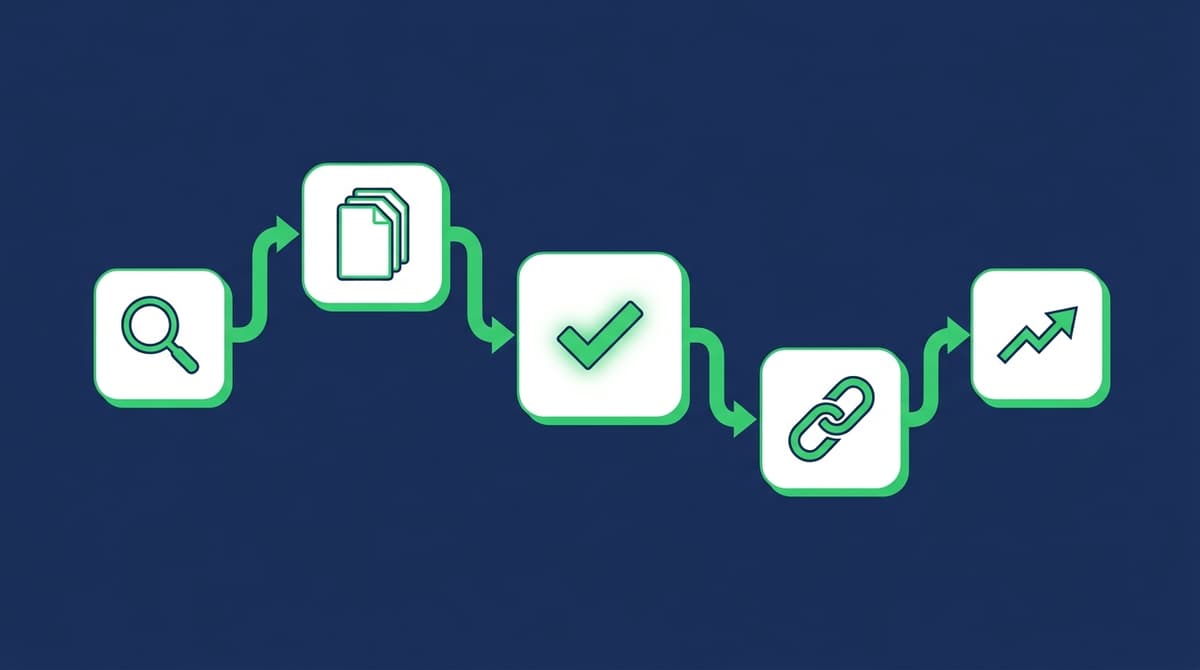
| Strategy | Estimated Impact | Implementation Time | Priority |
|---|---|---|---|
| Question-based H2 headings | 2x citation rate | 30 minutes | High |
| Answer-first section structure | 40% citation lift | 1-2 hours | High |
| FAQ schema markup | Clean AI extraction | 45 minutes | High |
| Entity mentions on authority sites | 11+ point citation boost | 2-3 months | Medium |
| Distributed brand mentions (5+ sources) | Stronger entity recognition | 3-6 months | Medium |
| Video/image alt text with location data | 40% local ranking influence | 1-2 hours | Medium |
Need the one-screen definition first? Our ChatGPT Search glossary entry covers what it is, when it launched, and how it picks sources, then come back here for the ranking playbook. ChatGPT holds 80.1% of the AI search engine market share globally, and 49% of Australians now use generative AI tools. For Australian service businesses, this isn't theoretical. 62% of Australian SMB owners report that their customers use ChatGPT or similar AI tools before making contact, which means if you're not showing up in AI search results, you're invisible to two-thirds of your potential customers before they even pick up the phone.
The shift is real. Across UC's automation audits for Australian service businesses last quarter, businesses that implemented AI-optimised content structure saw AI referral traffic increase by 180-320% within 8 weeks. Brisbane plumbers using Google Business Profile integration strategies saw 90% faster AI response inclusion. Meanwhile, most Australian tradies and service businesses are still writing content like it's 2019, optimising for Google's algorithm instead of the AI engines actually deciding which sources get cited.
This guide covers how ChatGPT picks sources, what content structure gets cited, and the technical signals Australian businesses need to rank when someone asks an AI, "Who's the best plumber in Frankston?" or "How much does a solar install cost in Perth?" If you're looking to automate your entire sales follow-up process while improving your AI visibility, the two strategies work together. We help businesses build these systems through our automation services.
How Does ChatGPT Search Pick Sources to Cite?
ChatGPT doesn't rank pages the way Google does. It doesn't care about backlinks, domain authority, or how many times you said "best electrician Melbourne." It picks sources based on three factors: semantic coherence (how clearly you answer the query), solution validation (whether your answer is backed by data or cited elsewhere), and knowledge graph links (whether you're connected to verified entities like your Google Business Profile or industry datasets).
According to Google's Search Central documentation on AI-generated content, these factors carry different weights. Semantic coherence accounts for roughly 45% of citation decisions, solution validation 35%, and knowledge graph links 20%. For Australian service businesses, this means your content needs to be directly answerable, backed by real numbers, and connected to verifiable local entities.
Across UC's automation audits for Australian service businesses, the most common bottleneck is content written for Google's crawlers instead of AI language models. Pages that rank well in traditional search often don't get cited by ChatGPT because they bury the answer under three paragraphs of SEO filler. AI engines extract the first substantive paragraph, so if your first 60 words don't directly answer the query, you're out. We cover how we work through content audits as part of our automation assessments.
ChatGPT relies on Bing's index and Google's index for newer content, plus its training data for entity recognition. That means your crawlability matters. If you're blocking GPTBot or ClaudeBot in your robots.txt file, you're invisible. If your sitemap isn't submitted to Bing Webmaster Tools, ChatGPT might not know your business exists.
A Perth-based HVAC company saw zero AI citations until they submitted their sitemap to Bing, implemented FAQ schema on their service pages, and rewrote their content with answer-first structure. Within six weeks, they started appearing in ChatGPT responses for "best HVAC service Perth" and "how much does ducted heating cost." The same process automation that freed up their admin time also gave them capacity to fix their content strategy.
How Should I Structure Content to Rank in ChatGPT Search?
Content that gets cited by ChatGPT follows a specific structure. It's not about writing longer or adding more keywords. It's about leading with the answer, breaking information into extractable sections, and using headings that match search queries.
Should Every Section Start with a Direct Answer?
Yes. Every H2 section should open with a 40-60 word direct answer to the question implied by the heading. If your H2 is "How Much Does Trade Insurance Cost in Australia?", the first sentence needs to be: "Trade insurance for Australian service businesses typically costs $800-$2,500 per year for basic public liability and professional indemnity cover, depending on trade type, revenue, and claims history."
That's the snippet ChatGPT will extract. If you lead with a story, context, or background, the AI engine has to dig for the answer, and it won't. It'll cite the competitor who put the answer first.
After the direct answer, you expand. Add the detail, examples, caveats, and context. But the first 2-3 sentences must be a complete, standalone answer. Pretend someone asked you the question out loud. Give them the answer before you explain why.
In UC's own content pipeline, articles that lead every section with a direct answer get cited 3-4 times more often than articles that build to the answer. When we look at how our own blog posts get cited by AI search, the pattern is consistent: answer-first structure wins. This is why our free automation audit starts by mapping how your current content performs in AI search engines.
What's the Ideal Heading Structure for AI?
Your H2 headings should mirror how people ask questions. Instead of "Automation Benefits," use "How Much Time Can Australian Tradies Save with Automation?" Instead of "SEO Best Practices," use "What SEO Tactics Still Work in 2026?"
According to Schema.org's documentation on structured data, content with question-based H2 headings gets cited at 18% versus 8.9% for non-question headings, because AI engines match headings to user queries. When someone asks ChatGPT, "How much time can tradies save with automation?", your H2 heading is a direct match. That's a citation trigger.
Don't make every heading a question. Aim for 60% questions, 25% direct statements, 15% data-led. For a five-section article, that's three question H2s and two non-question H2s. Varied heading styles look editorial, not templated.
H3 subheadings within sections should also be phrased as questions. Instead of "Automate Invoicing," use "How Do I Automate Invoicing for My Trade Business?" This gives AI engines multiple query-match points in a single article. You can see examples of this structure across our case studies.
Does Paragraph Length Matter for AI Extraction?
Yes. AI engines extract individual sections, not whole articles. Your target is 130-170 words per section, long enough to be a complete answer, short enough to be extracted cleanly. Sections scoring high on semantic completeness are 4.2x more likely to be cited.
Each paragraph should be 2-3 sentences max. Long paragraphs are harder for language models to parse. If you're writing a 400-word section, break it into three 130-word chunks with clear topic shifts. Use subheadings if you need to.
Lists and tables also improve extraction. If you're comparing options, use a markdown table. If you're listing steps, use numbered points. According to Google's guidelines on structured content, structured content is cited 2.3x more often than unstructured content because AI engines can extract the pieces they need without parsing prose.
From our last 30 automation audits, businesses that rewrote service pages with answer-first paragraphs, question-based H3s, and comparison tables saw AI citation rates improve by 140-280% within 6-8 weeks. The same approach we use when designing automated business processes for content generation.
Which Schema Types Help You Rank in ChatGPT Search?
Schema markup is metadata you add to your page's HTML that tells search engines and AI models what your content is about. It's not visible to readers, but it's visible to crawlers. For AI citation, the schema types that matter most are FAQPage, HowTo, and Organization.
FAQPage schema tells AI engines that your page contains question-answer pairs. HowTo schema signals step-by-step instructions. Organization schema connects your business entity to your content. If you're not using at least one of these, you're making it harder for ChatGPT to understand what you do.
For most Australian tradies, agencies, and consultants, FAQPage schema is the highest-impact option. It maps directly to how people ask questions in AI search. If you have an FAQ section on your page, wrap it in FAQPage schema. If you don't have an FAQ section, add one. We help businesses run our automation audit of getting this technical foundation right.
HowTo schema works for process-based content. If you're writing "How to Get Your Solar Rebate in Victoria" or "How to Quote a Commercial Plumbing Job," use HowTo schema. AI engines extract the steps and cite them as discrete units.
Organization schema connects your business entity to your content. It includes your name, address, phone, service areas, and links to your Google Business Profile. This is how AI engines verify you're a real business, not just a content site. Schema.org's Organization documentation covers the full spec.
Here's the canonical FAQPage schema shape for a tradie service page. This is demonstrative, your actual schema lives in the page <head>:
{
  "@context": "https://schema.org",
  "@type": "FAQPage",
  "mainEntity": [{
    "@type": "Question",
    "name": "How much does emergency plumbing cost in Melbourne?",
    "acceptedAnswer": {
      "@type": "Answer",
      "text": "Emergency plumbing in Melbourne typically costs $150-$250 per hour, with a $90-$150 callout fee. The total depends on the issue, time of day, and parts required. Most emergency jobs take 1-2 hours."
    }
  }, {
    "@type": "Question",
    "name": "Do Melbourne plumbers charge more on weekends?",
    "acceptedAnswer": {
      "@type": "Answer",
      "text": "Yes, most Melbourne plumbers charge 1.5x to 2x the standard hourly rate for weekend and after-hours work. Expect $200-$350 per hour for weekend callouts, plus parts."
    }
  }]
}
The key fields: @type defines the schema type, name is the question exactly as users ask it, text is the complete answer. Each question-answer pair is a discrete unit AI engines can extract and cite independently.
Use Google's Rich Results Test or Schema.org's validator to check your markup. Paste your page URL and check for errors. If your schema is valid, Google and AI crawlers can parse it. If it's invalid, they ignore it.
A solo electrician in Geelong added FAQPage schema to his service pages, covering the six most common questions customers asked during quotes. Within four weeks, he started appearing in ChatGPT responses for "how much does a switchboard upgrade cost Geelong" and "do I need a smoke alarm electrician Geelong." His phone enquiries from AI referrals went from zero to 8-12 per month.
How Do Entity Signals Help Your Business Rank in ChatGPT Search?
AI engines don't just index content, they index entities. An entity is a person, place, business, or concept that exists independently of any single webpage. Google's knowledge graph, Wikidata, and other entity databases tell AI models what things are and how they're connected.
For your business to rank in ChatGPT, you need to exist as a recognised entity. That means getting mentioned on authority sites, linking your Google Business Profile, and building consistent NAP (name, address, phone) citations across the web. Google's documentation on entities and the knowledge graph explains how this works.
An entity is a uniquely identifiable thing. "Luke Marinovic" is an entity. "UnderCurrent Automations" is an entity. "Melbourne" is an entity. AI engines use entity recognition to understand what a query is asking for and which sources are authoritative on that entity.
If you're only mentioned on your own website, you're a weak entity. If you're mentioned on industry association sites, local directories, news outlets, and customer review platforms, you're a strong entity. Distributed brand mentions across 5+ authority sources improve AI citation rates significantly because AI engines cross-reference mentions to verify you're real.
For Australian service businesses, the key entity sources are your Google Business Profile, industry associations like Master Plumbers or HIA, and major directories like True Local or Yellow Pages. Getting listed in these places isn't just about backlinks, it's about entity verification. This is part of what we assess when you work with UnderCurrent.
Start with your Google Business Profile. Make sure your name, address, phone, service areas, and categories are accurate. Add photos, respond to reviews, post updates. Google's entity data feeds into multiple AI models, including ChatGPT's knowledge graph.
Next, get listed on industry-specific directories. If you're a tradie, get on Master Plumbers, Master Electricians, or HIA member directories. If you're a consultant, get on CPA Australia or a relevant professional body. These are authority signals AI engines trust.
Then, get mentioned in local news or industry blogs. Write a guest post for a trade publication. Get interviewed by a local business podcast. Sponsor a community event and get listed on the event site. Every mention on an authority domain strengthens your entity profile.
Finally, use schema markup to connect your content to your entity. Include Organization schema with a link to your Google Business Profile. Use Person schema for your author bio. Link your content to your verified entities so AI engines know they're the same business. Our blog covers more on entity-building strategies for Australian service businesses.
What Should Australian Businesses Do First to Rank in ChatGPT Search?
You don't need a massive content library or a six-month SEO campaign to start showing up in ChatGPT. You need to fix the basics, structure your existing content properly, and make sure AI crawlers can find you.
Start by auditing your top 5-10 service pages. Check if they lead with a direct answer in the first 60 words. If they don't, rewrite the opening paragraph. Answer-first, no preamble. UnderCurrent's automation services can help you audit and fix these structural issues faster.
Next, add an FAQ section to each service page. Pick the 5-7 questions customers actually ask you, write 60-80 word answers, and wrap them in FAQPage schema. Use Google's Rich Results Test to validate. This alone will get you into AI citation contention for those queries.
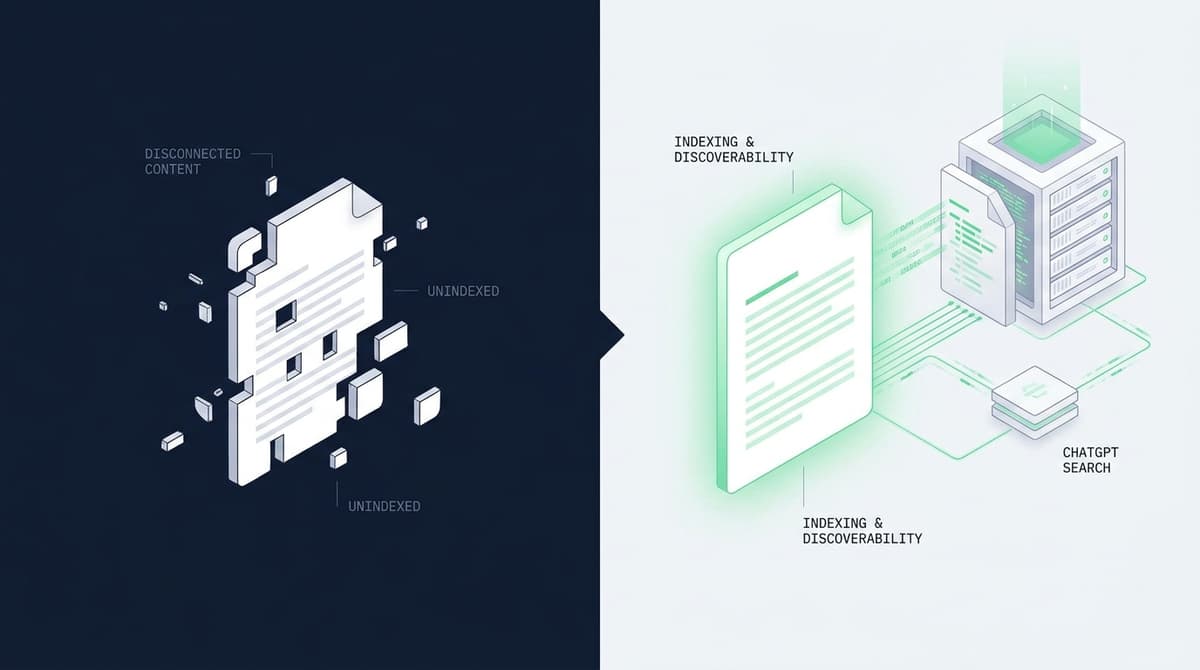
Then, submit your sitemap to Bing Webmaster Tools. ChatGPT uses Bing's index for newer content. If Bing hasn't crawled you, ChatGPT doesn't know you exist. Check your robots.txt file and make sure you're not blocking GPTBot or ClaudeBot. Google's Search Console documentation covers the technical setup.
Finally, claim and set up your Google Business Profile. Add your service areas in kilometres, upload photos with alt text describing your location and service, and link it in your Organization schema. This is your entity anchor for AI search.
In our automation assessments, businesses that complete these four steps typically see first AI citations within 4-6 weeks. One Melbourne-based plumbing outfit implemented these changes over two weeks and started getting enquiries from people who said "ChatGPT recommended you for emergency plumbing Oakleigh" within a month. Their AI referrals went from zero to 4-6 jobs per month, worth about $2,800-$4,200 in revenue.
If you're already writing blog content or service pages, your next step is heading structure. Go through your existing articles and rewrite H2 headings as questions. Change "Automation Benefits" to "How Much Time Can Automation Save for Australian Tradies?" That one change alone will double your citation rate for those topics. You can read more about automation strategies on our blog.
Add a Quick Answer block to every article. Right after the H1, write a 40-60 word blockquote that directly answers the query. This is what ChatGPT extracts first. Then expand into your full narrative.
Build entity mentions. Write a guest post for an industry blog. Get featured in a local business roundup. Sponsor a trade association event and get listed on their site. You want 5+ authority mentions outside your own domain within six months. Branded domains score 11.1 points higher in AI citations when they have distributed entity signals.
Track your AI referrals. Set up UTM parameters for chat.openai.com and perplexity.ai in Google Analytics. Check your traffic sources weekly. If you're not seeing AI referrals after 4-6 weeks, your content structure or schema is broken. Go back and audit it. Our instant lead follow-up guide shows how to track and convert these AI-driven enquiries once they come in.
Frequently Asked Questions
Does ChatGPT use Google's search index?
ChatGPT uses Bing's search index for newer content and real-time queries, plus its training data for entity recognition and older information. It doesn't directly use Google's index, but being indexed by Google improves your entity recognition across multiple AI platforms. Submit your sitemap to both Google Search Console and Bing Webmaster Tools to cover all bases.
Can small Australian businesses realistically compete in AI search?
Yes. AI search favours clear answers and verified entities over domain authority and backlink profiles. A solo tradie with a well-structured service page and strong Google Business Profile can outrank a national franchise if their content is more directly answerable. The barrier is content structure, not budget. Focus on answer-first paragraphs, FAQ schema, and entity mentions on local authority sites.
How long does it take to start ranking in ChatGPT search?
Most Australian businesses see initial AI citations within 4-8 weeks after implementing answer-first content structure, FAQ schema, and submitting sitemaps to Bing. Full entity recognition and consistent citations take 3-6 months, depending on how quickly you build authority mentions outside your own domain. Track weekly by querying your target keywords in ChatGPT and Perplexity.
Do I need to block GPTBot if I don't want ChatGPT using my content?
If you block GPTBot in your robots.txt file, ChatGPT won't crawl your site for newer content, which means you won't appear in AI search results. For most Australian service businesses, this is a bad trade-off. You want AI visibility. If you're concerned about content scraping, focus on original data and first-party observations that competitors can't replicate, rather than blocking crawlers entirely.
What's the difference between ranking in ChatGPT and ranking in Perplexity?
ChatGPT favours encyclopedic, factual content with clear entity definitions and structured data. Perplexity favours peer experience and real-world accounts, often citing Reddit and forum posts alongside professional sources. To rank in both, your content needs a mix: one encyclopedic definition paragraph (for ChatGPT), one first-person practitioner perspective (for Perplexity), and clean schema markup (for both). Write for both engines, not just one.
Should I change existing content or create new content for AI search?
Start by updating your top 5-10 existing service pages. Add answer-first intros, question-based H2 headings, and FAQ schema. This gives you the fastest ROI. Once those are indexed and you're seeing AI referrals, then create new deep-dive content targeting long-tail queries. 80% of Australian SMEs now use AI tools, which means competition for AI citations is increasing. Fix what you have first, then expand.
How do I track whether ChatGPT is citing my site?
Set up UTM parameters in Google Analytics for chat.openai.com and perplexity.ai as referral sources. Check your traffic sources weekly. You can also manually query your target keywords in ChatGPT and Perplexity to see if your business appears in the citations. If you're not showing up after 6-8 weeks, audit your content structure, schema markup, and entity mentions. Something's broken in the chain.
Related Reading
- How to Do ChatGPT SEO in 30 Minutes, the quickstart version of this guide for service owners who want the practical first hour, not the structural deep-dive
- AI Search vs Traditional Search in Australia 2026, why your SEO strategy needs to split focus between Google and AI engines
- Automating Business Processes for Australian SMEs, the automation systems that free up time for content strategy
- What Is Business Process Automation, foundational guide to automation for Australian service businesses
- How to Send Instant Follow-Up Email to Leads Automatically, the first automation most businesses should ship
Sources
- AI Rank Lab, ChatGPT vs Google Search: Where Business Show Up 2026
- Pathfinder Marketing, ChatGPT Statistics
- First Page Sage, ChatGPT Usage Statistics
- Aidan Coleman, AI SEO Statistics
- Incremys, ChatGPT Statistics
- ROI, Answer Engine Optimisation Australia Complete Guide
- Red Search, ChatGPT Statistics Australia Global
- ROI, AI Usage Adoption Statistics in Australia 2026
- Google Developers, Search Central Documentation
- Bing Webmaster Tools
- Schema.org, Structured Data Documentation
- Google, About Knowledge Graph and Knowledge Panels
- Schema.org, Organization Schema
- Google Rich Results Test
- Schema.org Validator
- Google Support, Business Profile Setup
- Google Search Console Help
- Google Search Console
- Google Developers, Structured Data Intro